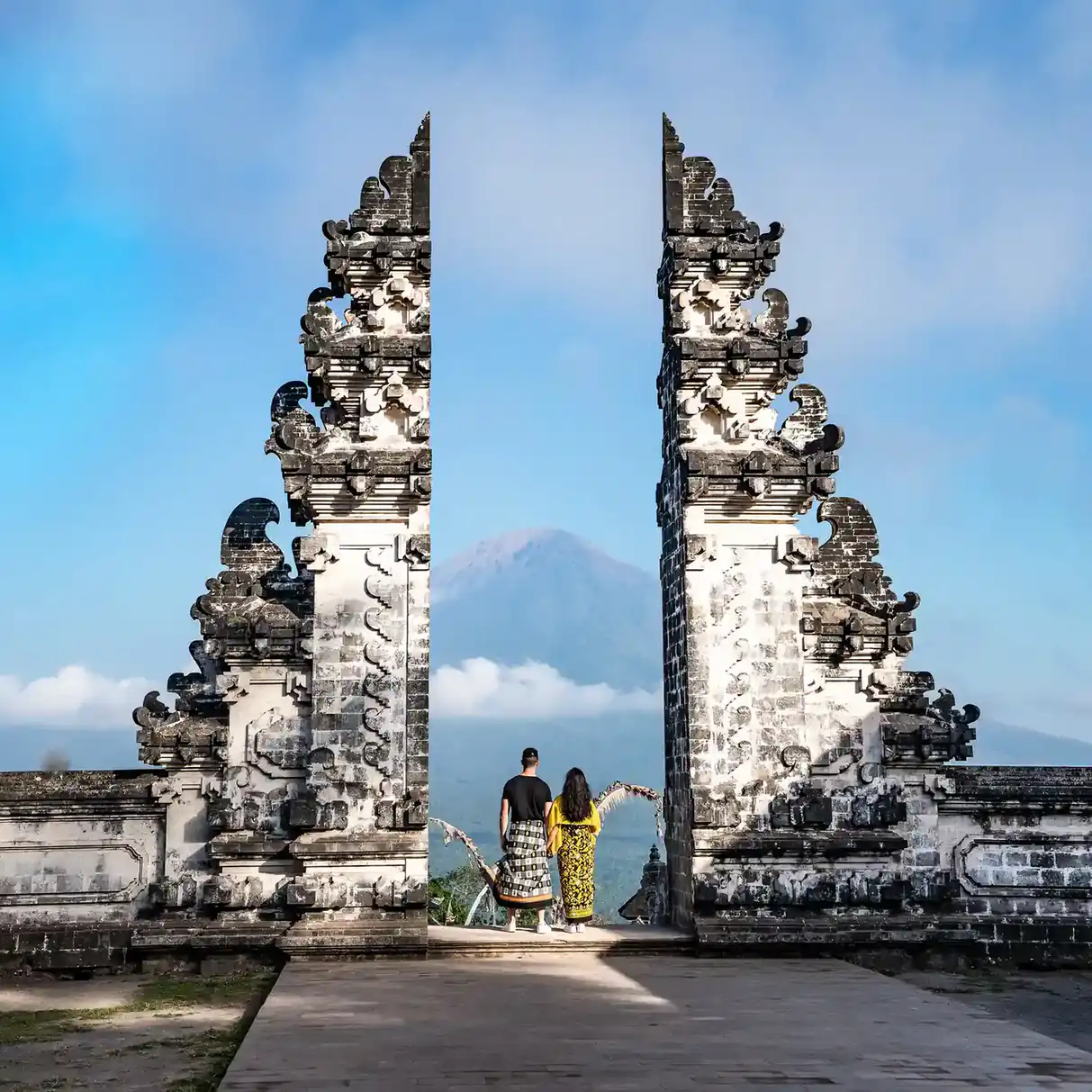
The Definitive India to Bali Travel Guide: Flights, Visa, and Currency

The first breath of Balinese air is a sensory initiation. It carries the sweet, heady perfume of frangipani and the subtle, spicy aroma of clove incense from a nearby canang sari offering. It’s a warm, humid embrace that signals your arrival, a world away from the urban energy of Delhi or Mumbai. For the discerning Indian traveler, the passage to this Indonesian island has become remarkably streamlined. What was once a journey requiring calculated layovers is now a direct flight, connecting India’s major hubs with Denpasar’s I Gusti Ngurah Rai International Airport (DPS) and simplifying entry with a straightforward visa process. This guide provides the essential intelligence for planning your travel from India to Bali, focusing on the critical details: visa protocols for Indian passport holders, direct flight logistics, and the nuances of currency exchange.
Navigating the Bali Visa on Arrival (VOA) for Indian Passport Holders
For citizens of India, entry into Bali for tourism purposes is an efficient and well-defined process. Indonesia grants a Visa on Arrival (VOA), designated as B213, to passport holders from over 90 countries, including India. This eliminates the need for extensive pre-travel consular applications for short stays, making a spontaneous trip from India to Bali a tangible possibility. The procedure is executed entirely upon landing at Denpasar’s Ngurah Rai International Airport (DPS). See also: see India to Bali Travel Guide’s Home.
Upon disembarking your flight, before proceeding to the main immigration counters, you will be directed to a dedicated VOA payment desk. Here, you must pay the official fee of IDR 500,000 per person. As of late 2023, this is approximately USD 35 or INR 2,900, though the exchange rate is subject to fluctuation. It is advisable to have the amount ready in Indonesian Rupiah, but major currencies such as USD, EUR, and AUD are also frequently accepted. Payment by Visa or Mastercard is also an option, though carrying sufficient cash is a prudent backup.
The Visa on Arrival Process: Step-by-Step
- Documentation Check: Ensure your passport has a minimum of six months validity from your date of entry into Indonesia. You must also hold a confirmed return or onward ticket.
- Payment: At the VOA counter in the arrivals hall, present your passport and pay the IDR 500,000 fee. You will receive a payment receipt.
- Immigration: Proceed to the immigration counter with your passport, boarding pass, VOA receipt, and a completed customs declaration form. The officer will affix a VOA sticker to your passport.
This Visa on Arrival is valid for an initial stay of 30 days. For travelers wishing to extend their time on the island, a one-time extension for an additional 30 days is possible. This process must be initiated at an official immigration office (Kantor Imigrasi) in Bali, such as the ones located in Jimbaran or the capital, Denpasar, well before your initial 30-day visa expires. The official fee for this extension is also IDR 500,000. For stays exceeding 60 days, one must apply for a different visa type, such as the B211A Tourist Visa, from an Indonesian embassy or consulate before traveling.
Inline FAQ: What documents do I need for the Bali Visa on Arrival as an Indian citizen?
To secure a VOA, you need three primary documents: your Indian passport with at least six months of remaining validity, a confirmed return or onward flight ticket out of Indonesia, and the visa fee of IDR 500,000 (or its equivalent in an accepted major currency).
Direct Flights from India to Bali: Gateways from Delhi, Mumbai, and Bengaluru
The introduction of direct air corridors has fundamentally changed the calculus of planning a Bali holiday from India. The most significant development is Vistara’s non-stop service from Delhi’s Indira Gandhi International Airport (DEL) to Denpasar (DPS), which commenced on December 1, 2023. This route eliminates the layovers in hubs like Singapore, Kuala Lumpur, or Bangkok, reducing total travel time to approximately 7.5 to 8 hours. The service, operated by an Airbus A321neo aircraft, offers a seamless connection for travelers seeking efficiency and comfort. This direct Delhi to Bali flight has become the preferred option for those originating from Northern India.
For travelers based in Mumbai and Bengaluru, while direct, non-stop options are still emerging, premium one-stop connections remain highly efficient. Airlines such as Singapore Airlines (via Singapore’s Changi Airport), Malaysia Airlines (via Kuala Lumpur International Airport), and Thai Airways (via Suvarnabhumi Airport in Bangkok) offer well-timed flights with short layovers, often resulting in total journey times of 9 to 12 hours. These routes from Mumbai (BOM) and Bengaluru (BLR) provide consistent service and are a reliable way to orchestrate your Bali from India travel plans.
Comparative Flight Options: India to Bali (DPS)
| Origin City | Primary Airline (Sample) | Flight Type | Average Journey Duration | Key Considerations |
|---|---|---|---|---|
| New Delhi (DEL) | Vistara (UK145) | Direct, Non-Stop | 7.5 – 8 hours | The fastest and only direct India to Bali flight. Operates daily. |
| Mumbai (BOM) | Singapore Airlines | 1-Stop (via SIN) | 9 – 11 hours | High frequency of flights and superior service via the world-renowned Changi Airport. |
| Bengaluru (BLR) | Malaysia Airlines | 1-Stop (via KUL) | 8 – 10 hours | Often presents a competitive price point with a convenient layover in Kuala Lumpur. |
| Mumbai (BOM) | IndiGo / Turkish Airlines | 1-Stop (via IST) | 16+ hours | A less direct option, but can sometimes offer lower fares for budget-conscious travelers. |
Inline FAQ: What is the best time to book a flight from India to Bali for a lower price?
Typically, booking 3 to 4 months in advance yields more favorable pricing. Bali’s shoulder seasons (April-June and September-October) often see lower airfares compared to the peak dry season of July and August or the holiday period in December and January. Avoiding major Indian holidays like Diwali can also result in more accessible fares.
Currency Exchange: Converting Indian Rupee (INR) to Indonesian Rupiah (IDR)
The official currency of Indonesia is the Indonesian Rupiah (IDR). The large denominations can be initially disorienting; it is common for prices to be in the tens of thousands or millions. As a reference, 1 Indian Rupee (INR) is approximately 195 IDR, though this rate is subject to daily market fluctuations. It is crucial to handle currency exchange with diligence to protect your funds. See also: Contact.
While INR is not a readily exchangeable currency in Bali, carrying a major currency like US Dollars (USD) or Euros (EUR) is the most effective strategy. Exchange these at authorized money changers in Bali rather than converting INR to USD in India and then USD to IDR in Bali, which incurs double conversion fees. Upon arrival at Denpasar airport, it is practical to exchange a small amount (e.g., USD 100) to cover immediate expenses like transport and a meal. The airport exchange rates are generally less favorable than those found in tourist centers like Kuta, Seminyak, or Ubud. See also: details on Vegetarian Food Bali Indians.
Best Practices for Currency in Bali:
- Use Authorized Changers: Seek out reputable money changers that have a “PVA Berizin” (Authorized Money Changer) certification from Bank Indonesia. Well-regarded chains include BMC (Bali Maspintjinra) and Central Kuta Money Exchange. Avoid small, unofficial-looking stalls offering unusually high rates.
- ATM Withdrawals: ATMs are widespread and a secure way to access cash. Use machines affiliated with major banks like BCA, Mandiri, or BNI. Inform your Indian bank of your travel dates to prevent your card from being blocked. Withdrawals are typically capped at IDR 2,500,000 or IDR 3,000,000 per transaction.
- Credit Card Usage: Visa and Mastercard are widely accepted at hotels, larger restaurants, and established boutiques. American Express is less common. Be aware that many smaller establishments and local warungs (eateries) are cash-only.
Inline FAQ: Is it better to carry USD or INR to exchange in Bali?
It is significantly better to carry US Dollars. The USD is a universally accepted currency for exchange in Bali with competitive rates. Attempting to exchange Indian Rupees directly will be difficult and will result in a poor exchange rate. It is best to convert your INR to USD in India before your departure.
A Curated 7-Day Bali Itinerary Framework for the Indian Traveler
This framework is designed as a logical progression through the island’s diverse landscapes, balancing cultural immersion with relaxation. It assumes arrival via a morning or afternoon India to Bali flight.
- Days 1-2: Seminyak & Canggu Acclimatization. Upon arrival at DPS and clearing immigration, a pre-arranged transfer takes you to Seminyak (approx. 30-45 minutes). Settle into your accommodation. Witness the sunset from a sophisticated beachfront venue like Potato Head Beach Club. The following day, explore the vibrant cafe scene and boutiques of nearby Canggu.
- Days 3-4: The Cultural Core of Ubud. Journey inland to Ubud (approx. 60-90 minutes), the island’s artistic and spiritual heart. Visit the UNESCO-listed Tegalalang Rice Terraces, an example of the ancient subak irrigation system. Spend an afternoon at the Sacred Monkey Forest Sanctuary and visit the Tirta Empul temple, known for its holy spring water purification rituals.
- Day 5: Coastal Exploration in Uluwatu. Travel south to the Bukit Peninsula. Check into your hotel before heading to the Uluwatu Temple, a magnificent sea temple perched on a 70-meter-high cliff. The highlight is the traditional Kecak fire dance, performed as the sun sets over the Indian Ocean.
- Days 6: Leisure and Gastronomy. A day for personal pursuits. This could involve a Balinese cooking class focused on local spices, a spa treatment, or simply relaxing by the coast. This is an excellent opportunity to explore Bali’s sophisticated dining scene.
- Day 7: Departure. Enjoy a final Balinese breakfast before your transfer to I Gusti Ngurah Rai International Airport (DPS) for your flight back to India, whether it’s the direct Delhi to Bali return or a one-stop flight from Mumbai to Bali.
A Guide to Vegetarian Cuisine in Bali
Bali is exceptionally accommodating for vegetarian and Jain travelers, a fact that will be welcome news for many planning their trip from India. The island’s Hindu heritage and a strong focus on fresh, plant-based ingredients mean that vegetarian options are not an afterthought but an integral part of the culinary landscape. The wellness-focused communities in Ubud and Canggu, in particular, are home to a high concentration of world-class vegetarian and vegan restaurants. See also: currency inr idr.
Beyond dedicated establishments, many traditional Indonesian dishes are either naturally vegetarian or can be easily adapted. When ordering, you can specify your dietary requirements. Key dishes to look for include Gado-gado (a salad of blanched vegetables, tofu, and tempeh with a rich peanut sauce), Tempeh Manis (sweet, fried tempeh), and Sayur Urab (a Balinese salad with steamed vegetables and spiced grated coconut).
Essential Information for Vegetarian Diners:
- Notable Restaurants: Seek out celebrated venues like Kynd Community and The Shady Shack in Canggu, or Moksa and Zest in Ubud for innovative plant-based cuisine.
- Useful Phrases: Learning a few key phrases in Bahasa Indonesia is helpful. “Saya vegetarian” means “I am vegetarian.” “Tanpa daging” means “without meat,” and “tanpa telur” means “without egg.”
- Jain Food Considerations: While pure Jain food (without onion, garlic, or root vegetables) is less common in standard restaurants, many high-end hotel restaurants and specialized vegetarian cafes can accommodate these requests with advance notice.
Inline FAQ: Is it easy to find pure vegetarian or Jain food in Bali?
Finding pure vegetarian food is very easy across Bali, especially in tourist areas. The island has a thriving vegan and vegetarian scene. For strict Jain requirements, it is best to communicate directly with your hotel’s chef or select specialized restaurants in Ubud or Seminyak that explicitly cater to such dietary needs, often requiring prior communication.
Essential Pre-Departure Checklist and Booking with Confidence
A well-planned trip ensures a seamless experience from the moment you leave home. Our expertise at India to Bali Travel Guide is in crafting these precise, tailored experiences. We manage the logistical complexities so you can focus on the destination. Consider this your final checklist before embarking on your Bali from India holiday.
A Step-by-Step Preparation Guide:
- Passport and Documentation: Verify your passport has over six months of validity. Print a copy of your return flight itinerary and your hotel booking confirmation.
- Flight Booking: Secure your India Bali flight well in advance, especially if traveling during peak season. Compare direct options from Delhi with premium one-stop flights from Mumbai and Bengaluru.
- Accommodation: Reserve your hotels or villas. Bali offers a vast range, from private pool villas in Seminyak to serene resorts overlooking rice paddies in Ubud.
- Visa on Arrival Preparation: Prepare IDR 500,000 in cash or have a credit card ready for the VOA fee upon arrival in Denpasar.
- Ground Transport: Arrange for a reliable airport transfer to your hotel. This avoids the hassle of negotiating with taxi drivers upon arrival after a long flight.
By entrusting your travel arrangements to a specialist, you gain access to vetted local partners, on-ground support, and an itinerary designed with an understanding of the Indian traveler’s preferences. We ensure every detail, from securing the best vegetarian-friendly hotels to arranging private drivers, is handled with precision.
India to Bali Travel Guide
For bespoke itineraries and expert travel planning, please contact our specialists.
- Phone: +62 811-3941-4563
- Email: bd@juaraholding.com
- Office Address: Jalan Sunset Road No. 88, Kuta, Badung, Bali 80361, Indonesia