Currency INR to IDR Bali — Conversion, ATMs, Card Use


Currency INR to IDR Bali — Conversion, ATMs, Card Use | India to Bali Travel


The Financial Gateway: Your India to Bali Currency Guide for INR to IDR

Currency INR to IDR Bali — Conversion, ATMs, Card Use

The first tangible exchange upon arriving in Bali is often not one of pleasantries, but of currency. The scent of frangipani and clove incense at Denpasar’s Ngurah Rai International Airport (DPS) mingles with the crisp, unfamiliar texture of Indonesian Rupiah notes. For the Indian traveler, accustomed to the heft of the Rupee, the transition to handling thousands, even millions, of Rupiah for a simple transaction can be disorienting. A coffee priced at IDR 45,000 sounds extravagant until you realize it’s merely ₹225. Mastering this financial shift is the first step in a seamless transition from your direct india to bali flight to the island’s vibrant life.

This guide is engineered for travelers originating from India—whether on the direct Vistara flight from Delhi or connecting through Mumbai or Bengaluru. It addresses the specific financial nuances you will encounter, from pre-departure currency exchange strategies to on-the-ground ATM withdrawals and navigating the local customs of payment. Proper financial preparation ensures your focus remains on the rice paddies of Tegallalang and the temple ceremonies of Uluwatu, not on calculating conversion rates in a queue. See also: book Contact.

Understanding the Indonesian Rupiah (IDR): A Primer for Indian Travelers

The official currency of Indonesia is the Rupiah, abbreviated as IDR and locally symbolized as ‘Rp’. For travelers arriving from India, the most immediate observation is the number of zeros. Due to historical inflation, the denominations are large. A grasp of the basics is essential before you even plan your bali from india itinerary.

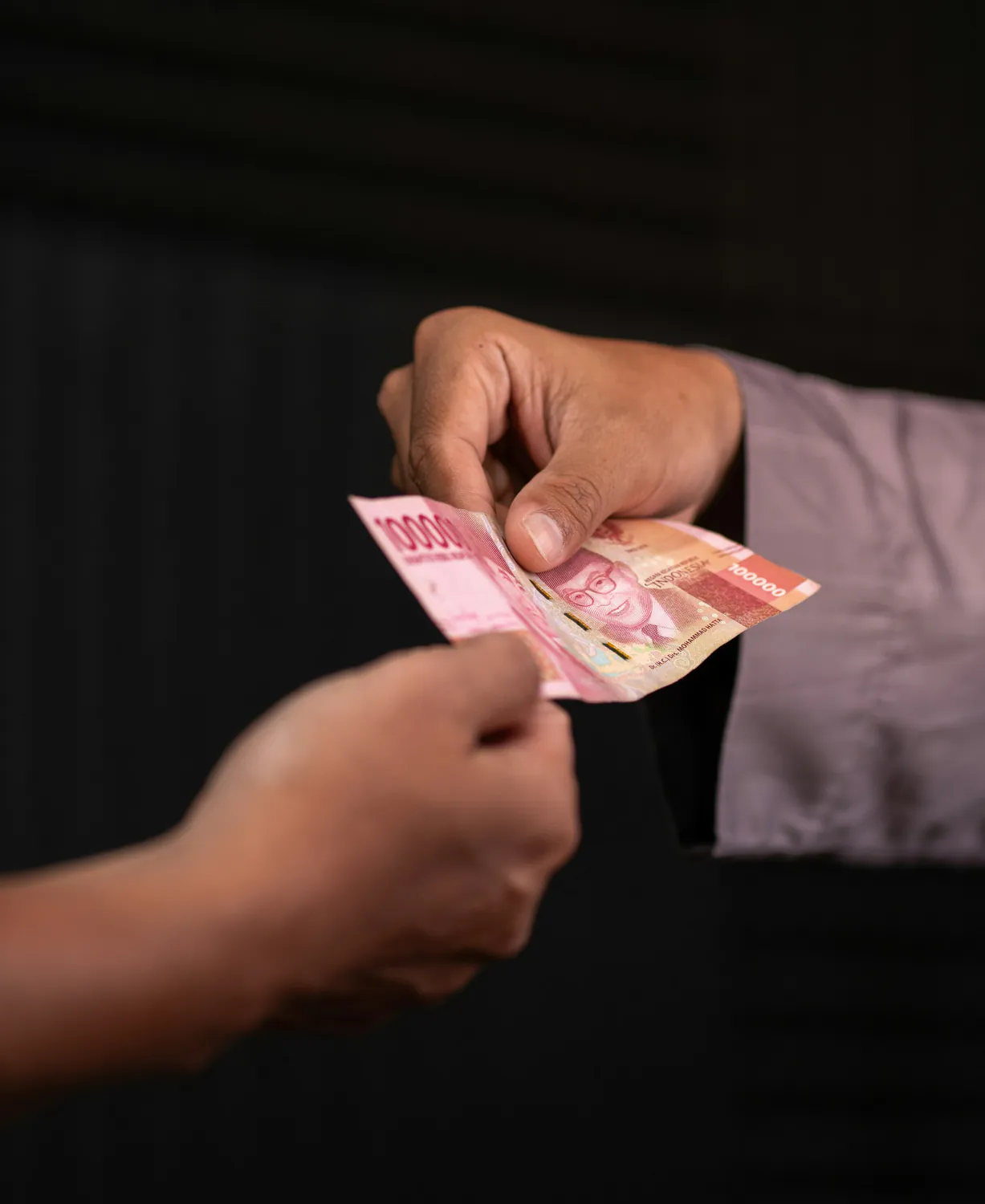
Banknotes are issued in denominations of Rp 1,000, Rp 2,000, Rp 5,000, Rp 10,000, Rp 20,000, Rp 50,000, and the largest, Rp 100,000. Coins exist but are less common in tourist transactions and come in values of Rp 100, Rp 200, Rp 500, and Rp 1,000. To simplify communication, locals often drop the last three zeros and use the term ‘K’ (kilo) or ‘ribu’ (thousand). So, a price quoted as “50K” or “50 ribu” means IDR 50,000. See also: book Home.

The exchange rate fluctuates daily, but as of late 2023, a general baseline is approximately 1 INR to 200 IDR. This is a useful mental shortcut: simply double the INR amount and add two zeros to get a rough IDR equivalent (e.g., ₹500 is approximately IDR 100,000). However, for precise transactions, always refer to the day’s official rate. All currency is managed by Bank Indonesia, the nation’s central bank, established in 1953.

  • Common Banknotes: IDR 50,000 (blue) and IDR 100,000 (red) are the most frequently used for tourist transactions.
  • Mental Calculation: To convert IDR to INR, remove three zeros and divide by two. For example, IDR 200,000 becomes 200, which divided by two is ₹1,000.
  • Local Lingo: Familiarize yourself with “ribu” for thousand and “juta” for million. A price of “dua ratus ribu” means IDR 200,000.

Currency Exchange: Where to Convert INR to IDR in India and Bali

The decision of where to exchange your Indian Rupees for Indonesian Rupiah is a strategic one, impacting your initial travel budget. While carrying some local currency is advisable for immediate expenses like a taxi or a bottle of water upon arrival, exchanging large sums requires careful consideration of rates and security. Travelers planning their trip to bali from india have several viable options, each with distinct advantages.

Exchanging a small amount of INR to IDR or a major currency like USD at airports in Delhi (DEL) or Mumbai (BOM) before your flight can provide peace of mind. However, airport exchange counters typically offer less favorable rates. The most cost-effective strategy is often to exchange money at an authorized money changer in Bali’s main tourist areas like Kuta, Seminyak, or Ubud. These establishments offer competitive rates, often close to the mid-market rate, and display their buy/sell prices clearly. Avoid unsolicited offers on the street or small, unofficial-looking shops offering unusually high rates, as these are often fronts for scams involving commission fees or sleight-of-hand counting. Reputable companies like PT. Central Kuta Money Exchange or BMC (Bali Maspintjinra) have numerous branches and a reputation for transparency.

Comparison of Currency Exchange Options

Exchange LocationTypical RateConvenienceSecurity RiskBest For
Indian Airport (e.g., Delhi, Mumbai)Poor to FairHigh (Pre-departure)LowSmall amounts (e.g., ₹5,000-₹10,000) for immediate needs.
Ngurah Rai Airport, Bali (DPS)FairVery High (On-arrival)LowExchanging enough for a taxi and first meal (e.g., ₹10,000).
Authorized Bali Money Changer (e.g., Central Kuta)ExcellentModerate (Requires a trip)Low (if reputable)Bulk exchanges for the majority of your trip’s cash needs.
Bali Hotel Front DeskPoorHighLowEmergency or very small, last-minute exchanges.

A note on USD: While INR can be exchanged directly, carrying some US Dollars (crisp, new notes from 2009 or later) can sometimes yield a slightly better exchange rate in Bali. This adds an extra conversion step but may be financially beneficial for larger amounts. See also: our Direct Flights India Bali.

Navigating ATMs in Bali: Withdrawals and Fees

For many travelers, ATMs offer the most convenient way to access cash. After your delhi to bali flight, using an Indian debit or credit card at a Balinese ATM is straightforward. Major Indonesian banks such as Bank Mandiri, BCA (Bank Central Asia), BNI (Bank Negara Indonesia), and CIMB Niaga have extensive ATM networks in all tourist areas. Look for machines located in secure, well-lit areas, preferably inside a bank’s lobby or attached to a minimart like Circle K or Indomaret.

Most ATMs in Bali have a maximum withdrawal limit per transaction, typically between IDR 1,500,000 and IDR 3,000,000 (approx. ₹7,500 to ₹15,000). This is a security measure. If you need more cash, you will have to perform multiple transactions, which can incur multiple fees from your home bank. Before you travel, it is critical to inform your Indian bank (e.g., HDFC, ICICI, SBI) of your travel dates to prevent your card from being blocked for suspicious international activity. See also: food bali indians.

Key Considerations for ATM Use:

  • Withdrawal Fees: Your Indian bank will likely charge a foreign transaction fee. This is often a flat fee (e.g., ₹150-₹250) plus a currency conversion markup (typically 2.5% to 3.5%). The local Indonesian bank usually does not charge an additional fee.
  • ATM Denominations: Look for stickers on the ATM indicating the note denomination it dispenses (IDR 50,000 or IDR 100,000). Using an ATM that dispenses IDR 100,000 notes allows you to withdraw the maximum amount in a single transaction more easily.
  • Security Precautions: Always cover the keypad when entering your PIN. Check the card slot and keypad for any unusual attachments, which could be card-skimming devices. If the machine retains your card, contact your bank immediately.

Credit and Debit Card Usage: Acceptance and Surcharges

While Bali is modernizing, it remains a predominantly cash-based economy, especially for smaller, local enterprises. Your Indian credit or debit card (Visa and Mastercard are widely accepted; American Express less so) will be useful, but should not be your sole source of funds. Planning your financial strategy for a trip from mumbai to bali should involve a mix of cash and card.

Cards are readily accepted at mid-range to high-end hotels, international restaurant chains, large supermarkets (like Bintang or Pepito), and established boutiques in Seminyak and Ubud. However, for local warungs (eateries), market stalls, private drivers, temple entrance fees, and small tour operators, cash is king. Attempting to pay for a plate of Nasi Goreng worth IDR 25,000 with a card is generally not possible.

When you do pay by card, be aware of two common practices:

  • Merchant Surcharges: Many businesses in Bali add a surcharge of 2-3% to your bill for card payments. This is to cover their own processing fees. They are legally required to inform you of this beforehand.
  • Dynamic Currency Conversion (DCC): You may be offered the choice to pay in Indian Rupees (INR) instead of Indonesian Rupiah (IDR). Always decline this and choose to pay in the local currency (IDR). While paying in INR seems convenient, the exchange rate used for DCC is set by the merchant’s bank and is almost always significantly worse than the rate your own bank would provide.

A Sample Daily Budget: Financial Planning for Your Bali Holiday

Budgeting is a crucial part of planning any india to bali flight holiday. Costs can vary dramatically based on your travel style. Below is a sample breakdown to help you estimate your daily expenses, excluding accommodation and flights. These figures are per person, per day.

Expense CategoryBudget TravelerMid-Range TravelerLuxury Traveler
Food (3 meals)IDR 200,000 (₹1,000)IDR 600,000 (₹3,000)IDR 1,500,000+ (₹7,500+)
Transport (Scooter/GoJek/Driver)IDR 80,000 (₹400)IDR 300,000 (₹1,500)IDR 800,000+ (₹4,000+)
Activities & Entrance FeesIDR 100,000 (₹500)IDR 400,000 (₹2,000)IDR 1,200,000+ (₹6,000+)
Total Daily Estimate (IDR)IDR 380,000IDR 1,300,000IDR 3,500,000+
Total Daily Estimate (INR)~₹1,900~₹6,500~₹17,500+

For a typical one-week mid-range trip to bali from india, a cash budget of around IDR 5,000,000 to IDR 7,000,000 (₹25,000 to ₹35,000) per person, supplemented by a credit card for larger expenses like hotel bills or fine dining, is a reasonable starting point.

Frequently Asked Questions: INR to IDR for Indian Travelers

Navigating a new currency system naturally brings questions. Here are answers to common queries from Indian travelers preparing for their Bali holiday.

Can I use Indian Rupees (INR) directly in Bali?
No. The Indian Rupee is not a convertible currency in Bali. You must exchange your INR for Indonesian Rupiah (IDR). No hotel, restaurant, or shop will accept INR for payment.
Is it better to carry USD or INR from India for exchange in Bali?
While INR can be exchanged at major authorized changers, the US Dollar (USD) is more widely accepted and often receives a more favorable exchange rate. If you have easy access to USD, it is often the better choice. Ensure notes are in excellent condition, particularly for $100 bills printed after 2009.
How much cash should I carry for a 7-day trip from a city like Mumbai to Bali?
A safe starting amount is the equivalent of $200-$300 USD in cash (either in USD or INR for exchange). This covers your Visa on Arrival (IDR 500,000 or approx. $35 USD), initial transport, and first day’s expenses, giving you time to find a good money changer or ATM without pressure.
What is the best travel card for Bali from India?
Multi-currency forex cards from services like Wise or Niyo Global are excellent options as they offer better exchange rates and lower fees than most standard Indian bank debit/credit cards. Check their specific IDR rates and ATM withdrawal fee structures before purchasing.
Are UPI apps like Google Pay or PhonePe accepted in Bali?
As of late 2023, direct UPI payments are generally not accepted for retail transactions in Bali. However, following a landmark agreement between the Reserve Bank of India and Bank Indonesia in August 2023, work is underway to integrate India’s UPI with Indonesia’s QRIS (Quick Response Code Indonesian Standard). This service is in its pilot phase and may become more widely available in 2024, but for now, you should not rely on it.
Do I need a visa for Bali from India, and how does it relate to currency?
Indian passport holders are eligible for a Visa on Arrival (VoA) for a 30-day stay. The fee is IDR 500,000 per person. This must be paid at the dedicated counter at Ngurah Rai Airport before you proceed to immigration. You can pay this fee in IDR, USD, or other major currencies, or by Visa/Mastercard, but having the exact amount in cash (IDR or USD) is the most efficient method.

Your Financial Checklist Before Your India to Bali Flight

A few preparatory steps can ensure your financial journey is as smooth as your flight. Before you depart from Delhi, Mumbai, or Bengaluru, complete this checklist.

  • Inform Your Bank: Contact all banks whose cards you intend to use. Inform them of your exact travel dates (e.g., October 10 to October 17) and destination (Indonesia) to avoid your card being flagged for fraud and blocked.
  • Verify International Fees: Check the precise international ATM withdrawal fees and foreign currency transaction markups for your specific debit and credit cards. This information is often on the bank’s website or can be confirmed via customer service.
  • Prepare Initial Cash: Have enough cash on hand to cover your Visa on Arrival (IDR 500,000) and initial transport to your hotel (IDR 200,000-400,000 depending on location).
  • Download a Currency App: Install an offline currency converter app like XE Currency on your smartphone. It is an invaluable tool for quick calculations when shopping or dining.
  • Create a Mixed Portfolio: Do not rely on a single source of funds. A prudent strategy for any india to bali trip involves a mix of cash (exchanged in Bali), a primary credit card for large purchases, and a debit card for ATM withdrawals.

Plan Your Bali Itinerary with Local Expertise

For bespoke travel planning and on-the-ground support for your journey to Bali from India, contact our specialists. We provide guidance on everything from villa rentals to financial logistics.

Brand: India to Bali Travel Guide

Phone: +62 811-3941-4563

Email: bd@juaraholding.com

Office: Jalan Sunset Road No. 88, Kuta, Badung, Bali 80361